After a new visual identity launch, the design team faced an unsustainable volume of presentation rebrand requests spanning every team in the company. Decks were being created inconsistently across tools and templates, and the review cycle created bottlenecks that slowed down sales, marketing, executive communications, and customer-facing work. The challenge was building a system scalable enough to serve non-designers across multiple teams and AI platforms, without sacrificing brand quality or requiring design oversight at every step.
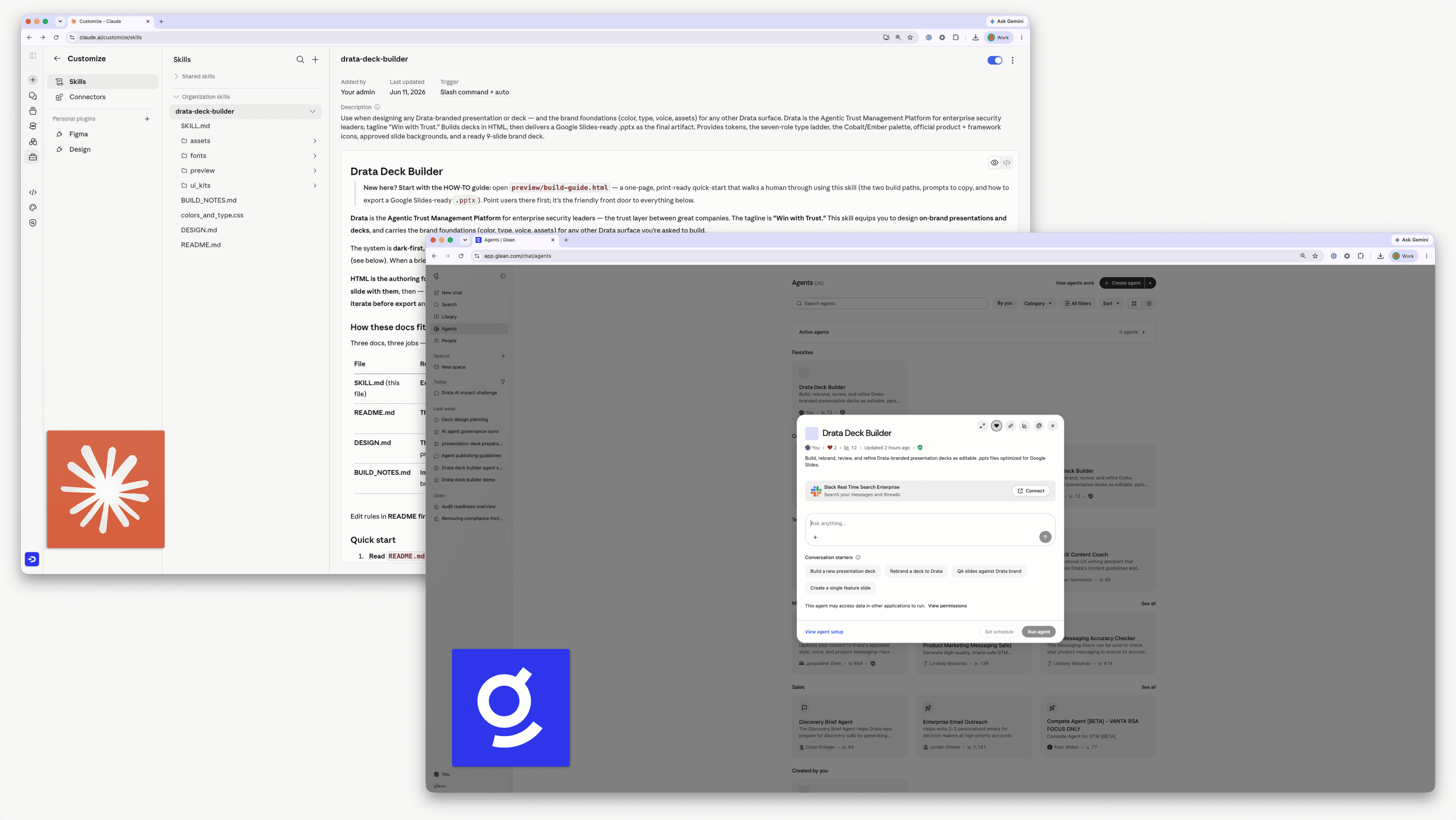
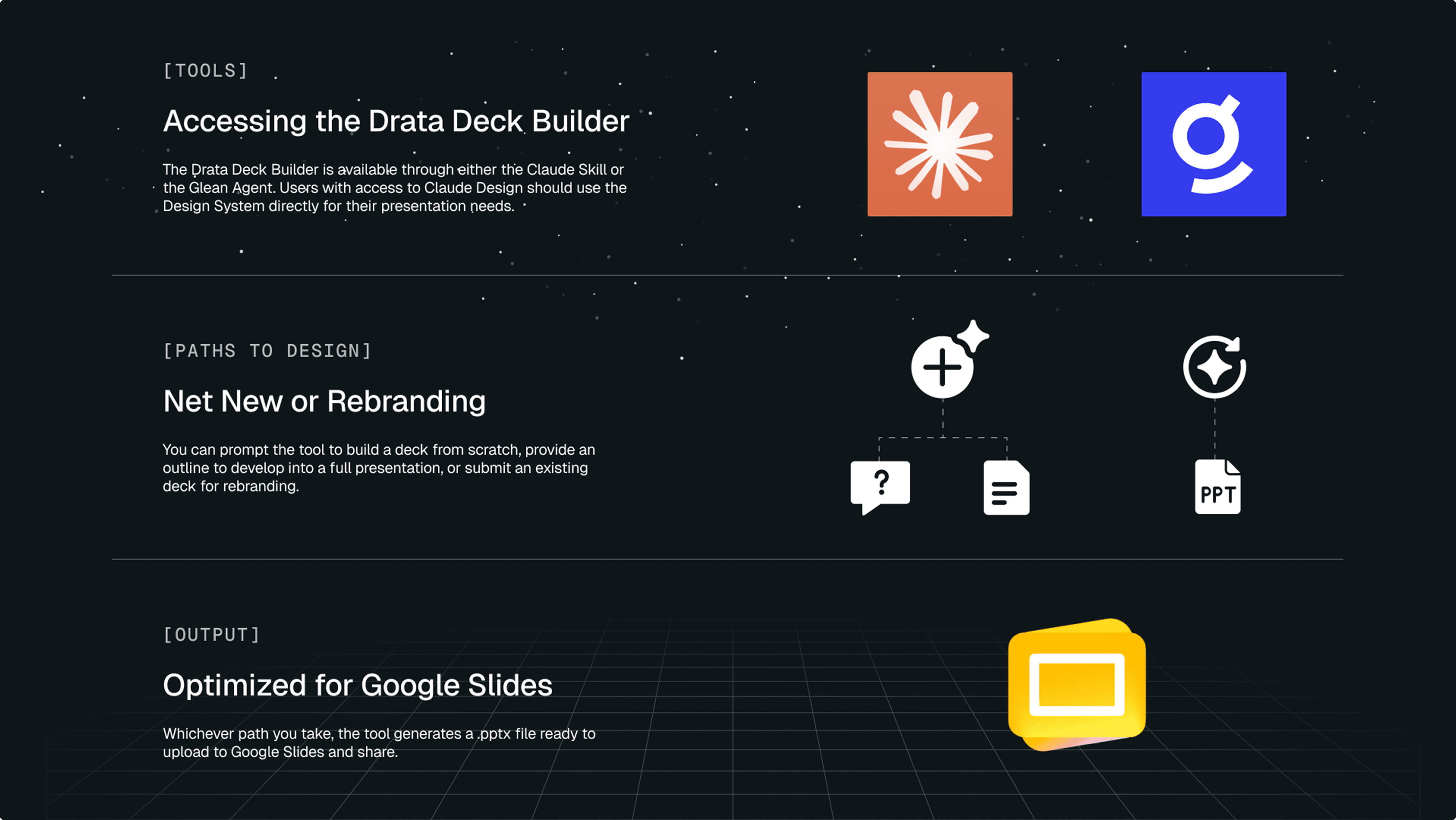
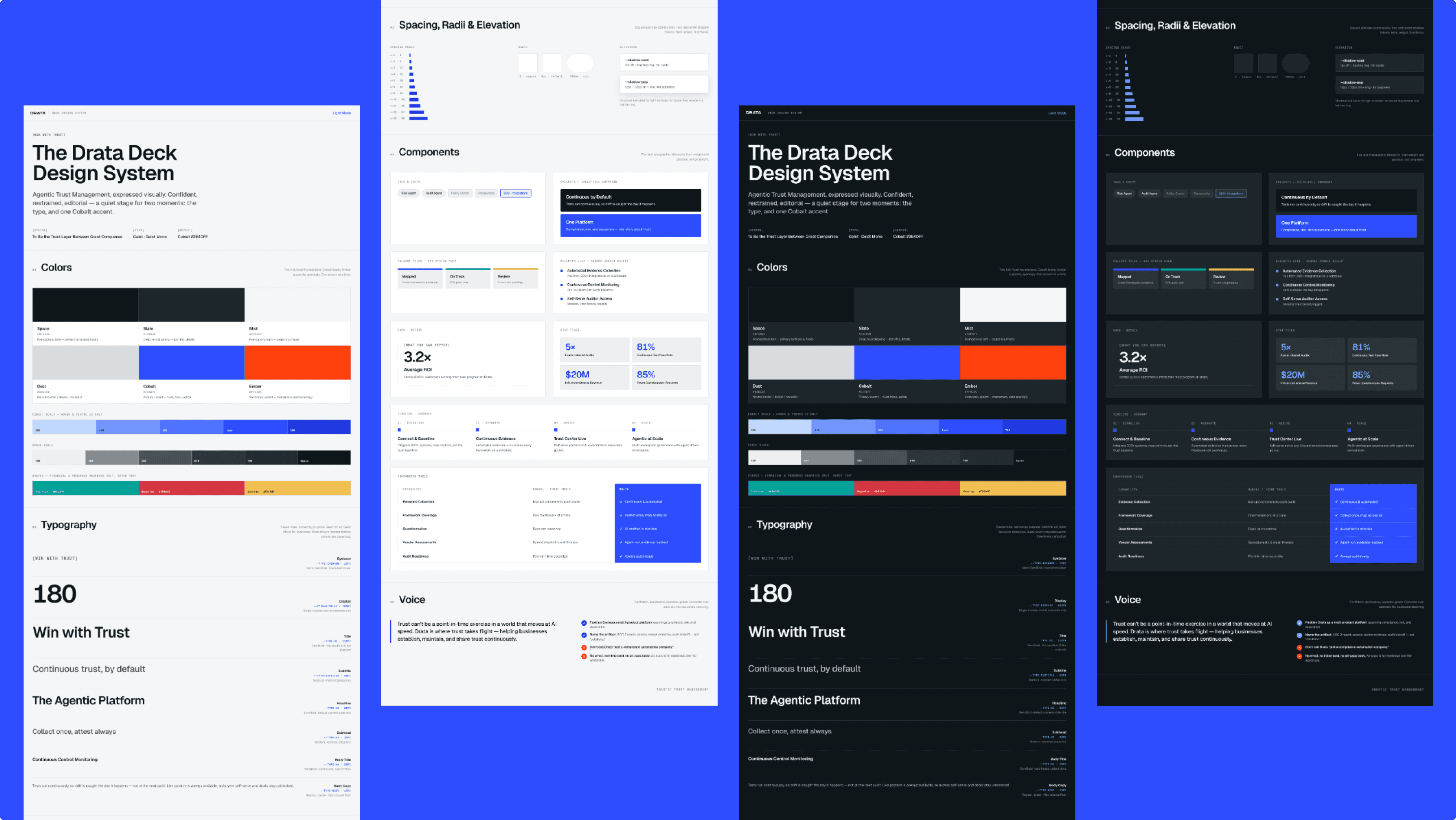
I architected the full system from the ground up — developing the design system documentation, user-facing guides, and the logic that powers both the Claude skill and the Glean agent. Rather than building two separate tools, I rearchitected the same core system for each platform, ensuring consistent output regardless of which tool a user accessed. The design system and skill serves the teams with Claude access, while the Glean agent extends the same capability to users already working within Drata's existing integrated AI environment. Both connect with content agents to review decks not just for visual consistency, but for messaging and voice alignment as well.
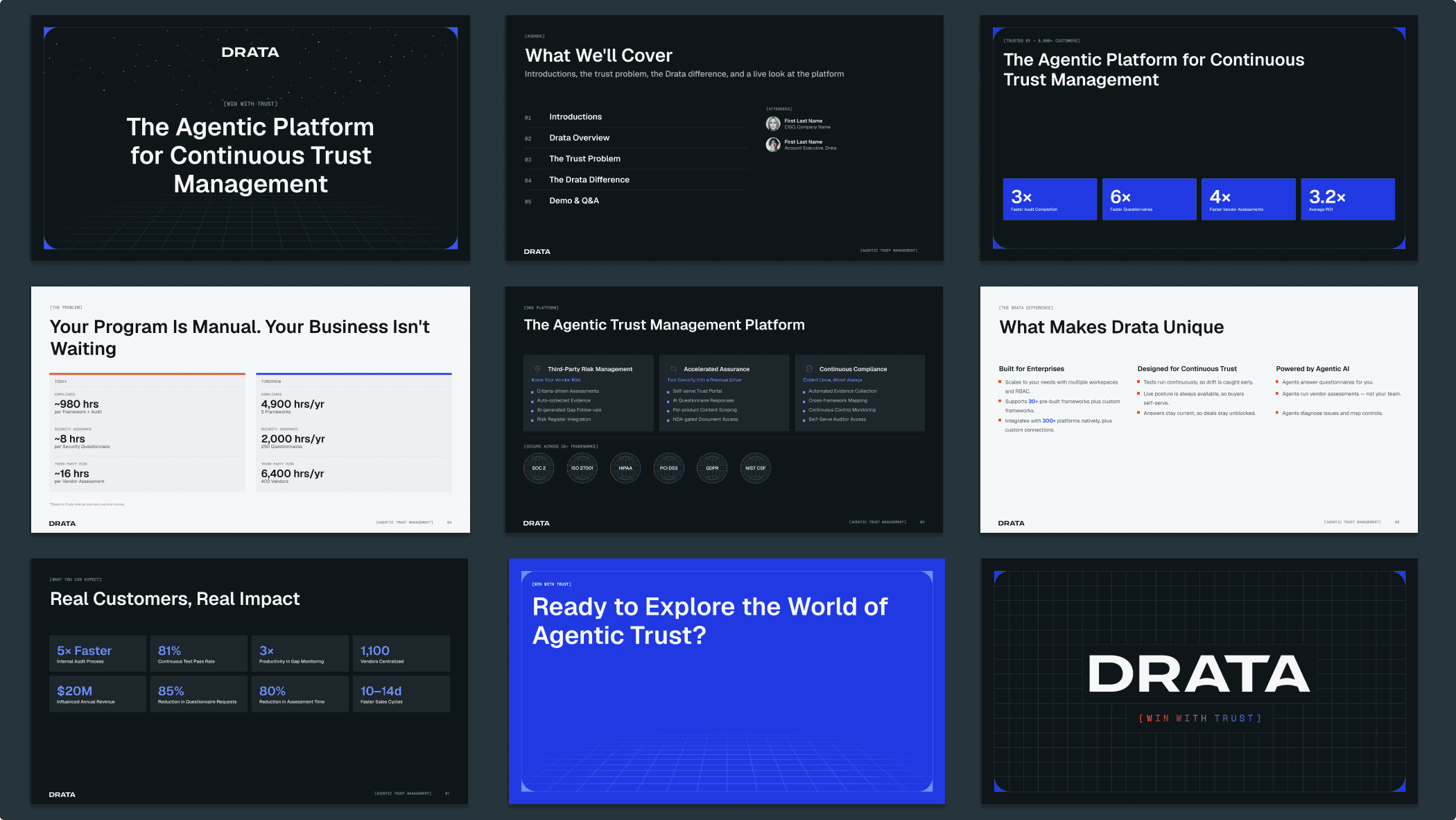
The system reduced design team dependency by 80%, freeing the team from manually designing every deck while remaining available for high-stakes polish and review. Deck production time dropped from 4+ hours to under 30 minutes, and users across every level of the organization can now produce on-brand presentations without waiting on a review cycle. The rollout spans marketing, sales, customer success, people, and exec teams — making it one of the most broadly adopted internal tools at Drata and a foundational piece of the company's AI-enabled creative infrastructure.